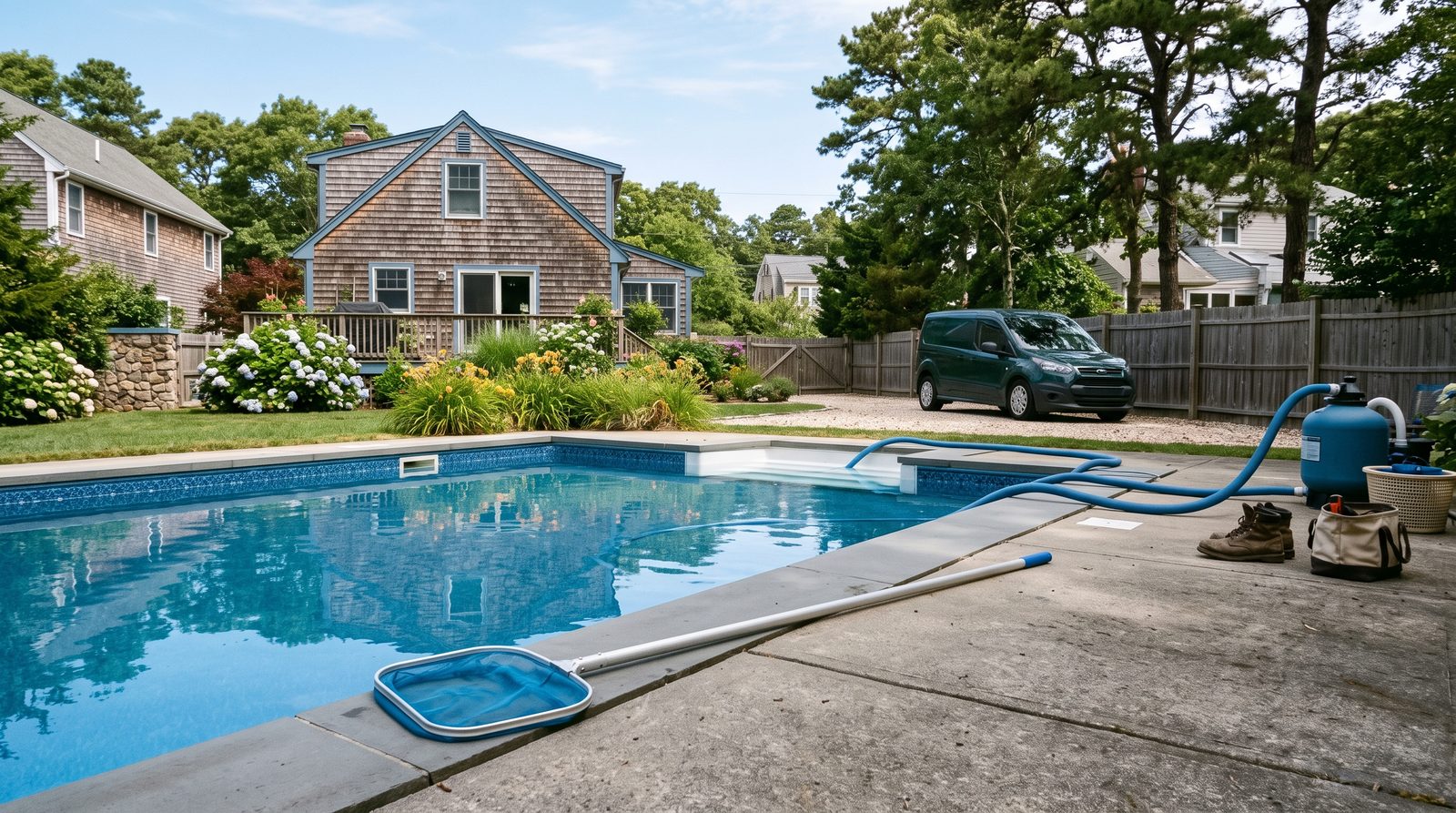
The best website features for pool companies
The best website features for pool companies are seasonal calls to action, dedicated service-plan pages, a real project gallery, a focused quote flow, useful town pages, and a problem-solving blog. Together, these features help a homeowner understand what the company does, see the work, and take the next step without having to decode one generic services paragraph.
Blue Buoy Pool Care is a fictional portfolio build, not a client case study or a report of pool-company results. You can tour the complete spec site at /demos/pools/ and inspect the decisions as a customer would. The point of this walkthrough is to show why each lead feature exists for a New Jersey pool business whose demand changes sharply across the shore season.
What a pool company homepage should include
A pool company homepage should identify the service area, explain the main service paths, show a clear phone or form action, and change its most visible seasonal message when the work calendar changes. The Blue Buoy build treats the homepage as a routing page. A visitor can move toward an opening, a closing, weekly care, a repair, or a recovery job without first figuring out which vague label might contain the answer.
The opening CTA is useful before and during the spring rush. It can lead to a page that explains preparation, scheduling, what the crew handles, and what information the owner should provide. Later, the closing CTA should become prominent as homeowners think about protecting equipment and preparing a property for the off-season. The same website can serve both moments, but the priority action should reflect the calendar rather than stay frozen all year.
This matters around Brick, Toms River, and Point Pleasant because the pool season is connected to shore travel and property use. An owner of a year-round home may need recurring care, while a seasonal rental owner may need a clear handoff before guests arrive. A seasonal CTA gives each visitor a more relevant route into the site. It does not need to promise a response time or a particular outcome to be useful.
Separate service pages for pool companies
Yes. Separate service pages make the offer legible and give each kind of searcher a page that answers the questions behind the call. Blue Buoy has dedicated pages for openings, closings, weekly service, and repairs, plus a green-to-clean recovery page. That is five distinct service paths before the site even reaches town content or the blog.
The weekly service page is where a plan becomes understandable. It can describe the visit pattern, what is checked, how a homeowner requests a quote, and what changes when the property is a rental. The page should explain the plan in plain language without inventing chemicals, equipment, licensing, or response claims that the actual company cannot support. A visitor should be able to compare the work to the problem they are trying to solve.
The opening and closing pages also give the business a place to address timing. A closing page can cover equipment, access, and questions to ask before a property is left unattended. A repair page can separate equipment trouble from water-condition work. On the Jersey Shore, a green-to-clean page can acknowledge that salt-air exposure, storm debris, and a long period between visits may create different starting conditions. The copy can be specific without claiming a universal treatment or result.
| Service page | Who is searching | What the page must explain | Season |
|---|---|---|---|
| Opening | An owner who wants the pool usable before the first warm weekend. | Scheduling, what preparation is needed, and the next step. | Spring, and demand arrives before the weather does. |
| Closing | An owner deciding whether to pay now or risk winter damage. | The fall service decision and a direct path to request it. | Early autumn, ahead of the first hard freeze. |
| Weekly service | An owner tired of doing it themselves, or a rental manager. | What the recurring plan covers and who it fits. | Peak summer, plus shoulder-season sign-ups. |
| Repairs and green-to-clean | Someone with a problem right now, searching a symptom. | Honest scope, what it can and cannot fix, and a quote prompt. | Any time, and spikes after a coastal storm. |
How should a pool company website show its work?
A pool company website should use a gallery to show the kind of work it wants to be hired for, with short context instead of a wall of unlabeled images. The Blue Buoy gallery is a conversion feature because it gives the service pages visual support. A homeowner can move from a weekly-care explanation to evidence of clean, maintained water or from a recovery page to before and after slots that make the work easier to picture.
For a real company, each image should be accurate and current. Useful captions can identify the service, the setting, and the specific problem addressed. They should not imply that a fictional demo image is a completed client job. Blue Buoy is intentionally a spec build, so its gallery demonstrates layout and content direction only. A pool company would replace those placeholders with permissioned photos from its own work.
The shore context changes what good proof needs to show. Photos from a mainland yard and a barrier-island property can answer different access and equipment questions. Salt air, sandy lots, tight side yards, and outdoor equipment exposed to nor'easters are not reasons to overstate expertise. They are prompts to label the job honestly and show the conditions the company actually serves.
What should a pool service quote form ask for?
A quote flow should ask only for information that helps the pool company understand the request and follow up. In the Blue Buoy concept, the form is a deliberate handoff after a visitor reads a service page. The call to action can identify the service needed, the town, the preferred timing, and a way to reply. The phone number remains visible for an owner who would rather talk through an opening, closing, repair, or weekly plan.
The form should not force every visitor through the same long questionnaire. Someone asking about a spring opening may know the property town and target week but not the equipment details. Someone reporting a green pool may be able to add a short description or a photo. A rental owner may need to explain access and turnover timing. The best flow gives the business enough context to start a useful conversation while leaving room for the follow-up questions that belong on the phone.
On a shore-area site, the town field is especially practical. Routes and access can differ between mainland Brick and a barrier island address, and a Long Beach Island rental may have a very different scheduling window from a year-round home in Jackson. That does not mean the form should make assumptions. It means the visitor should have an easy way to provide the location and the service context before asking for a quote.
Do pool companies need town pages and a blog?
Town pages and a blog are useful when they answer real local questions, not when they repeat the same sales copy with a new town name. Blue Buoy's service-area structure is designed for mainland and barrier-island coverage, so a real pool company could explain where it works, how access affects scheduling, and which service paths fit each area. A page for Brick should sound different from a page for Seaside Heights or LBI because the customer context is different, not simply because the heading is different.
The blog supports questions that are too specific for the main service pages. The demo topics include salt systems, liners, and storm cleanup. Those subjects can help a homeowner decide whether to ask for routine care, a repair visit, or a more detailed inspection. They also create a place to explain the limits of the service honestly. A post about storm cleanup can discuss what to document after a nor'easter without promising that every storm problem belongs to the pool company.
Regulatory topics need the same care. If an article touches pool construction, drainage, flood areas, CAFRA, or NJDEP guidance, it should direct readers to current official requirements and avoid turning general information into a permit promise. For a pool-care business, the strongest blog is practical: it helps an owner prepare, choose the right service conversation, and understand what information to bring to the quote request.
Frequently asked questions
What pages should a new pool company website have?
Start with a clear homepage, dedicated pages for the services you actually sell, a quote or contact flow, a gallery, and useful service-area content. Add a blog when you can publish specific answers about pool care, equipment, seasonal work, and the towns you serve.
How can a pool website generate opening and closing leads?
Give opening and closing work separate pages and make the seasonal priority visible on the homepage. Each page should explain the service, set expectations about scheduling, and lead to a short form or visible phone action. Update the priority as the season changes instead of leaving one CTA in place year round.
Should a pool service website list prices?
Only when the prices are accurate for the actual service and scope. Many pool requests depend on pool condition, access, equipment, timing, and travel, so a clear explanation of what shapes the quote can be more useful than a misleading flat number.
Are Blue Buoy Pool Care results from a real business?
No. Blue Buoy Pool Care is a fictional Shoreline Sites portfolio build created to demonstrate a pool-care website structure. Tour it at /demos/pools/ as a working design example, but do not read its pages, images, or calls to action as client testimonials or performance results.